Detailing Guide
What Is Paint Correction and What Does It Fix?
How paint correction removes (rather than hides) swirl marks, oxidation, water spots, and light scratches — and what to expect from each stage.
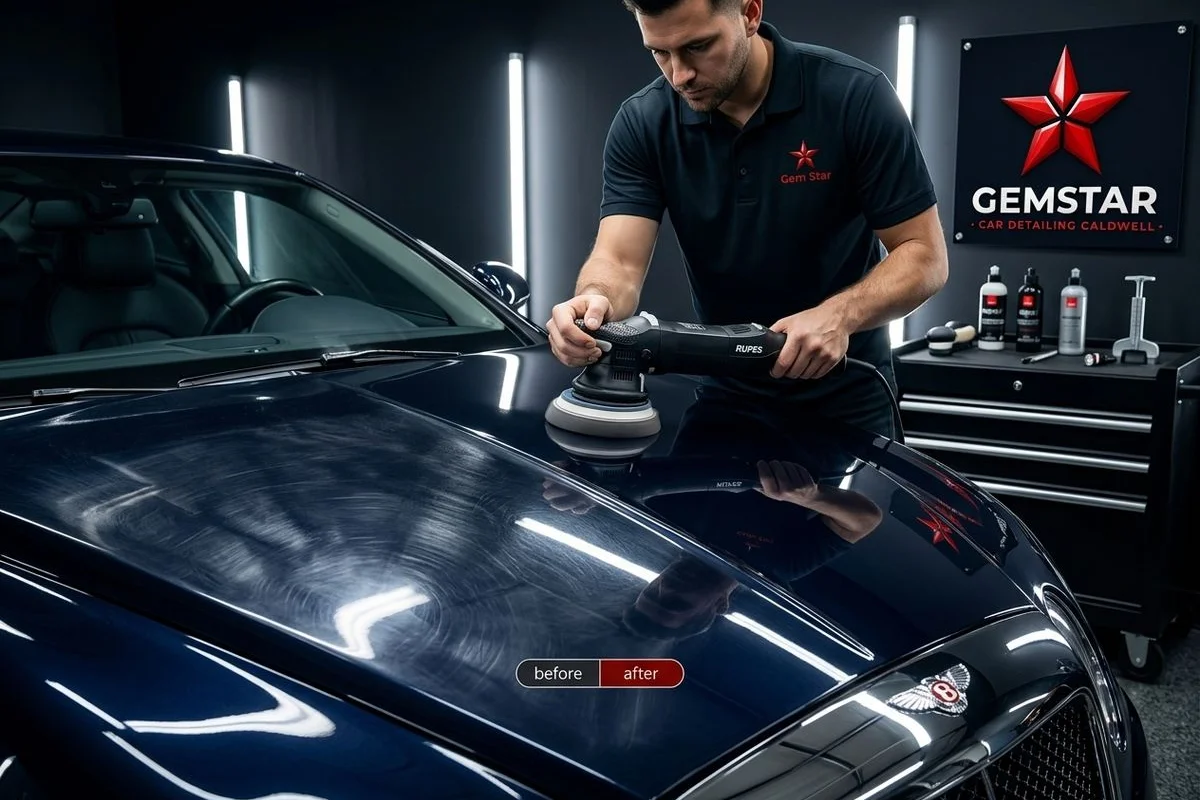
We see incredible transformations every day as a professional auto detailing service team.
The difference between a standard shine and a truly flawless finish usually comes down to clear coat management. A lot of homeowners and business owners ask us exactly what is paint correction and how it works.
Our clients frequently notice the impressive results, yet they often misunderstand the actual mechanics behind the deep gloss. Consider this your personal guide to having paint correction explained in plain English.
This guide details exactly what this service entails and the specific types of damage it eliminates. You will learn exactly when it makes sense to invest in correcting your vehicle’s exterior.
What Paint Correction Actually Does
What exactly does paint correction accomplish?
It is the controlled removal of a microscopic amount of damaged clear coat to eliminate surface defects. Our technicians use this precision process to reveal paint that looks better than the day the vehicle left the factory.
The average modern car rolls off the line with 30 to 50 microns of clear coat. We carefully remove just 2 to 5 microns of that layer during a typical paint polishing session. This delicate balance erases the imperfections without compromising the paint’s long-term UV protection.
The defects this process successfully removes include the following issues:
- Swirl marks and spider-webbing: Fine concentric scratches often caused by the friction cloths at some of the 80,000 automatic tunnel washes operating across the US.
- Holograms: Circular machine marks left behind by improper prior polishing attempts.
- Light scratches: Surface-level blemishes that have not penetrated past the clear coat layer.
- Water spots: Mineral deposits that have begun etching the surface but have not fully damaged the basecoat.
- Oxidation: The chalky, dull appearance that develops from intense UV exposure over the years.
- Bird-dropping etching: Acidic damage caught early enough to be polished away.
- Light bug etching: Minor stains from insect acids on the front bumper or hood.
There are limits to what polishing can fix. The defects correction cannot remove include the following:
- Deep scratches: Damage cutting through the clear coat straight into the basecoat.
- Stone chips: Rock chip damage requiring paint protection film or touchup paint.
- Peeling clear coat: Cracked surfaces which dictate replacement-grade body shop repair.
- Severe oxidation: Damage that has eaten completely through the protective top layer.
Single-, Two-, and Three-Stage Correction
What are the different stages of paint correction?
We offer three distinct correction tiers based on the severity of your vehicle’s exterior damage. Each level requires different tools, time commitments, and techniques to achieve the desired outcome.
Single-Stage Enhancement
A single-stage enhancement starts at $349 and involves one pass with a finishing polish on a soft pad. We typically recommend this for newer vehicles or daily drivers with only minor surface defects.
The process removes light swirls, restores gloss, and evens out subtle haze across the panels. Most clients enjoy a convenient same-day turnaround for this entry-level service.
Two-Stage Correction
Our two-stage correction begins at $649 and includes a compounding pass with a heavier polish. This initial cut is then followed by a separate finishing pass to refine the surface. It removes most swirls, heavy oxidation, deep water spots, and light scratches.
We find this is the most popular tier for Caldwell daily drivers showing three to five years of tunnel-wash damage. Detailers often use advanced machines like the Rupes LHR15 Mark V dual-action polisher to achieve these consistent results.
Three-Stage Show Car
The three-stage show car package starts at $1,099 and represents the highest level of restoration effort. We start with a heavy compound, move to a refining polish, and finish with a final jeweling polish for maximum gloss. This careful approach removes deep defects while producing the deepest possible reflection.
Our technicians ensure they do not remove more clear coat than absolutely necessary during these multiple passes. This extensive service is strictly reserved for specialty or luxury vehicles that justify the significant time investment.
Why “Removal” Beats “Hiding”
Why is removing defects better than just hiding them?
Erasing the scratches provides a permanent fix, while glazes only mask the problem temporarily. Cheap detailing shops often skip the hard work of actual correction.
They instead apply a glaze, which acts as a temporary filler to hide defects under a glossy oil layer. We refuse to use these temporary glaze fillers on your vehicle. The initial result of a glaze looks great for the first wash, but then the defects quickly reappear.
To make the best decision for your car, consider the stark differences between these two approaches.
| Feature | Paint Glaze (Hiding) | Paint Correction (Removal) |
|---|---|---|
| Action | Fills in scratches with temporary oils | Physically levels the clear coat |
| Longevity | Washes away in 4 to 8 weeks | Permanent until new damage occurs |
| True Gloss | Artificial shine that fades quickly | Authentic, deep reflection from smooth paint |
Our approach physically removes the damaged clear coat so the glossy result remains permanent. You only need to worry about the finish degrading if new physical damage occurs.
Paint Depth Gauge Measurements
How do we ensure paint correction is safe?
Real correction always starts with precise paint depth measurement. We use a high-end paint depth gauge, like the RZ Coating Thickness Gauge, to confirm clear coat thickness. This tool provides accurate readings across the hood, fenders, doors, roof, and trunk.
Healthy factory clear coat is typically 80 to 150 microns thick depending on the vehicle manufacturer. Our typical correction stages only remove about 1 to 5 microns of material. We measure the panels before, during, and after the process to confirm the paint remains in safe territory.
Professionals know that stopping the process is sometimes the best decision.
If a panel reads under 80 microns, it is generally too thin to correct safely without risking clear coat failure.
If a panel is already thin from a prior amateur polish, we adjust our machine speeds accordingly. Sometimes, the safest recommendation is skipping the correction on that specific section entirely.
Our honest answer about whether polishing is safe for your vehicle always begins with those initial paint readings. Guessing the thickness of your clear coat is a risk no professional should take.
Climate-Controlled Bay Matters
Why does the working environment matter so much for paint correction?
Polishing chemistry requires specific temperature and humidity levels to function predictably. A professional polishing compound behaves very differently as the weather shifts.
We rely on our climate-controlled bays to ensure perfect, consistent results every single time. A polish that works perfectly at 72°F and 45% humidity often behaves terribly at 95°F or 30°F. Working outside introduces several uncontrollable variables:
- High heat: Causes compounds to dry out quickly, leading to heavy dusting.
- Direct sunlight: Bakes chemicals into the paint, making them difficult to remove.
- Freezing temperatures: Prevents polishes from breaking down properly during the correction cycle.
Our controlled indoor environment eliminates these frustrating chemical failures. Driveway correction is essentially gambling with your valuable clear coat. This is especially true during the extreme heat of a Caldwell summer or the freezing temperatures of winter.
What Comes After Correction
What is the necessary next step after the paint is corrected?
You must immediately apply a protective layer to shield the vulnerable fresh clear coat. Corrected paint is incredibly smooth but at its absolute most vulnerable state.
We immediately apply one of several high-quality protective barriers to seal the finish. Your options for locking in that newly restored gloss include the following choices:
- Paint sealant: This provides about six months of reliable protection and is included on our Restoration tier exterior detail.
- Single-coat ceramic: A popular choice for medium-term protection against UV rays and hard water.
- Multi-year ceramic coating: We use advanced SiO2 formulations for our 1, 3, 5, or 9-year tiers to ensure long-term durability.
Correction without follow-up protection degrades incredibly quickly in harsh Idaho conditions. Our team discusses the absolute best protection layer for your specific needs at quote time. Applying a ceramic coating locks in the flawless finish and makes future washing significantly easier.
Now that you understand what is paint correction, you can make an informed choice for your vehicle. Reach out to our shop today to discuss your specific needs.
Related Service
Paint Correction
Ready to book this service in Caldwell? Get a same-day written quote.
Learn More About Paint Correction