Detailing Guide
Single-Stage vs Multi-Stage Paint Correction
When single-stage enhancement is enough, when two- or three-stage correction is required, and how to make the call on cost vs result.
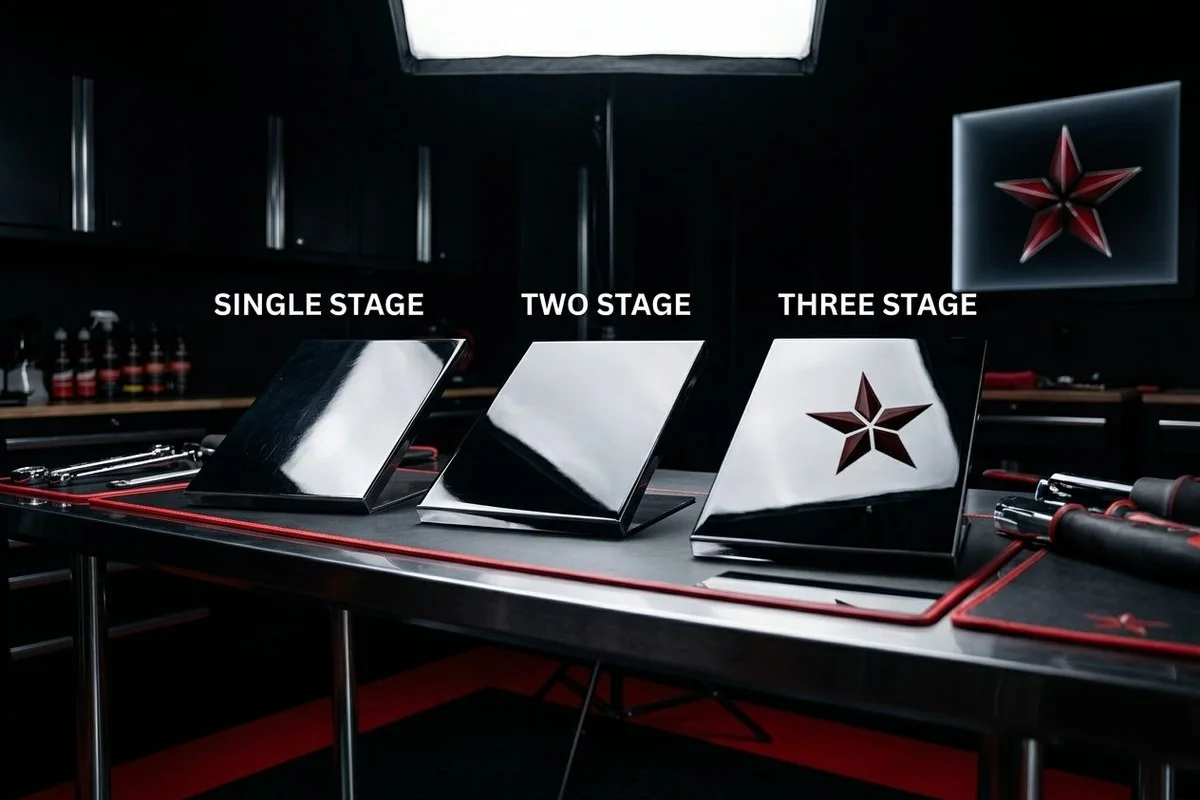
The single most-asked decision on a paint correction quote is choosing between single stage vs multi stage paint correction. We hear this question constantly from vehicle owners wanting to restore that factory shine.
Making the right call depends entirely on your clear coat condition and your long-term goals.
Let’s break down the actual results you can expect from each stage and how to match a tier to your specific vehicle.
What Each Stage Removes
Each level of paint correction targets specific depths of clear coat damage using different combinations of abrasive compounds and polishing pads. A heavier correction removes deeper scratches but requires more time and removes a microscopic layer of clear coat.
Single-Stage Enhancement ($349+)
This entry-level service utilizes a single step with a fine polish and a foam pad to enhance gloss and remove light surface defects. We typically use a high-quality dual-action polisher like a Rupes LHR15 to safely refine the finish without adding heat. This single step takes about four to six hours to complete.
- Light spider-web swirls
- Mild oxidation
- Surface water spots (not deeply etched)
- Light bug etching
- Minor swirl marks from tunnel-wash exposure
- Approximate defect removal: 60 to 80 percent
Two Stage Paint Correction ($649+)
A two stage paint correction involves a heavier cutting compound followed by a refining polish. This process tackles deeper imperfections that a single polish leaves behind. It often requires eight to twelve hours of dedicated labor for a standard mid-size SUV.
- Moderate to severe spider-web swirls
- Holograms from prior amateur rotary polishing
- Light scratches that haven’t penetrated clear coat
- Moderate oxidation
- Etched water spots
- Approximate defect removal: 90 to 95 percent
Three-Stage Show Car ($1,099+)
Our most intensive process adds a heavy compounding step, a medium polish, and a final ultra-fine jeweling polish. This service aims for absolute perfection and often involves multiple days of shop time. Factory clear coat is roughly 1.5 to 2.0 mils thick, and this stage safely maximizes defect removal without compromising that protective layer.
- Anything two-stage handles, plus:
- Deep micro-marring and random isolated deep scratches (RIDS)
- Heavier scratches still within clear coat
- Maximum gloss enhancement (jeweling polish)
- Pre-flagship-ceramic prep
- Approximate defect removal: 95 to 100 percent with deepest possible gloss
How to Decide
Choosing between a 1 stage vs 2 stage paint correction comes down to the age of your vehicle, your budget, and how you plan to protect the paint afterward. Review the specific use cases below to find your perfect match.
Single-stage is enough if:
- Vehicle is 1 to 4 years old
- Light tunnel-wash exposure
- Visible swirls in direct sunlight only
- You’re happy with “very good” rather than perfect
- Budget-conscious or selling within 1 to 2 years
Two-stage is right if:
- Vehicle is 4 to 8 years old
- Routine tunnel-wash use over multiple years
- Visible swirls in indoor lighting too
- You’re getting ceramic coating (5-year tier or higher) and want proper prep
- You plan to keep the vehicle 5+ years
Three-stage is right if:
- $50K+ vehicle being prepped for flagship ceramic
- Show car or concours vehicle
- Deep, severe defects requiring maximum correction
- Holograms from prior amateur polishing
- Maximum gloss is the explicit goal
The Test Panel Tells the Truth
We start every correction job by performing a physical test on a single panel. A front fender or rear quarter panel usually gives us an accurate read on the paint hardness and defect depth. This hands-on test determines the lightest stage needed to produce an acceptable result.
Sometimes an owner requests a three-stage correction, but our test shows a single-stage polish already achieves a 95 percent visible improvement. A modern clear coat can be surprisingly soft on certain Japanese vehicles, meaning heavy cutting is simply unnecessary.
Conversely, we might recommend stepping up from a single-stage plan if the test reveals more severe damage than initially visible. A quick wipe down with an isopropyl alcohol (IPA) solution often uncovers hidden scratches masked by old dealership waxes.
Cost-Per-Improvement Math
Calculating your return on investment involves looking at the raw cost against the percentage of defects removed. Diminishing returns play a massive role in high-end automotive detailing.
We break down the math to show exactly what you pay for each tier of improvement.
| Correction Stage | Estimated Cost Per Percentage of Defect Removed | Best Value For |
|---|---|---|
| Single-stage | $4 to $6 | Newer cars and standard daily drivers |
| Two-stage | $7 to $9 | Older daily drivers and 5-year ceramic prep |
| Three-stage | $11 to $14 | Collector vehicles and flagship ceramic prep |
The financial jump from single to two-stage brings a noticeable, worthwhile difference for most daily drivers. Spending the extra money to go from two-stage to three-stage makes financial sense almost exclusively for high-value collector vehicles or meticulous show prep.
Pre-Ceramic Considerations
The quality and longevity of your final ceramic coating dictate the level of correction required beforehand. A deeper correction creates a flatter, cleaner surface that allows professional coatings like Gtechniq Crystal Serum or CarPro CQuartz to bond correctly.
If you’re applying ceramic coating after correction, the right correction stage is influenced by the ceramic tier:
- 1-year or 3-year ceramic: Single-stage enhancement is usually adequate.
- 5-year ceramic: Two-stage correction is recommended (and is included in the package).
- 9-year flagship: Three-stage correction is included by default.
Coating performance relies heavily on this initial surface preparation. A well-prepared surface yields a stronger molecular bond, resulting in a longer-lasting hydrophobic barrier against water and dirt.
What We Recommend for Most Caldwell Drivers
Our most requested service tier is a two-stage correction on a five-year-old daily-driver SUV or pickup truck. This level of service easily covers 90 percent of the vehicles passing through our shop.
Single-stage polishes handle the vast majority of newer vehicles straight off the dealership lot. Three-stage correction remains reserved for premium exotic vehicles and our top-tier ceramic flagship clients.
You can schedule a physical inspection to get a precise read on your vehicle’s exact needs.
Related Service
Paint Correction
Ready to book this service in Caldwell? Get a same-day written quote.
Learn More About Paint Correction