Detailing Guide
Removing Hard-Water Spots from Boat Hulls and Gel Coat
How Snake River corridor mineral content etches gel coat, what removes light vs heavy spotting, and how to prevent recurrence.
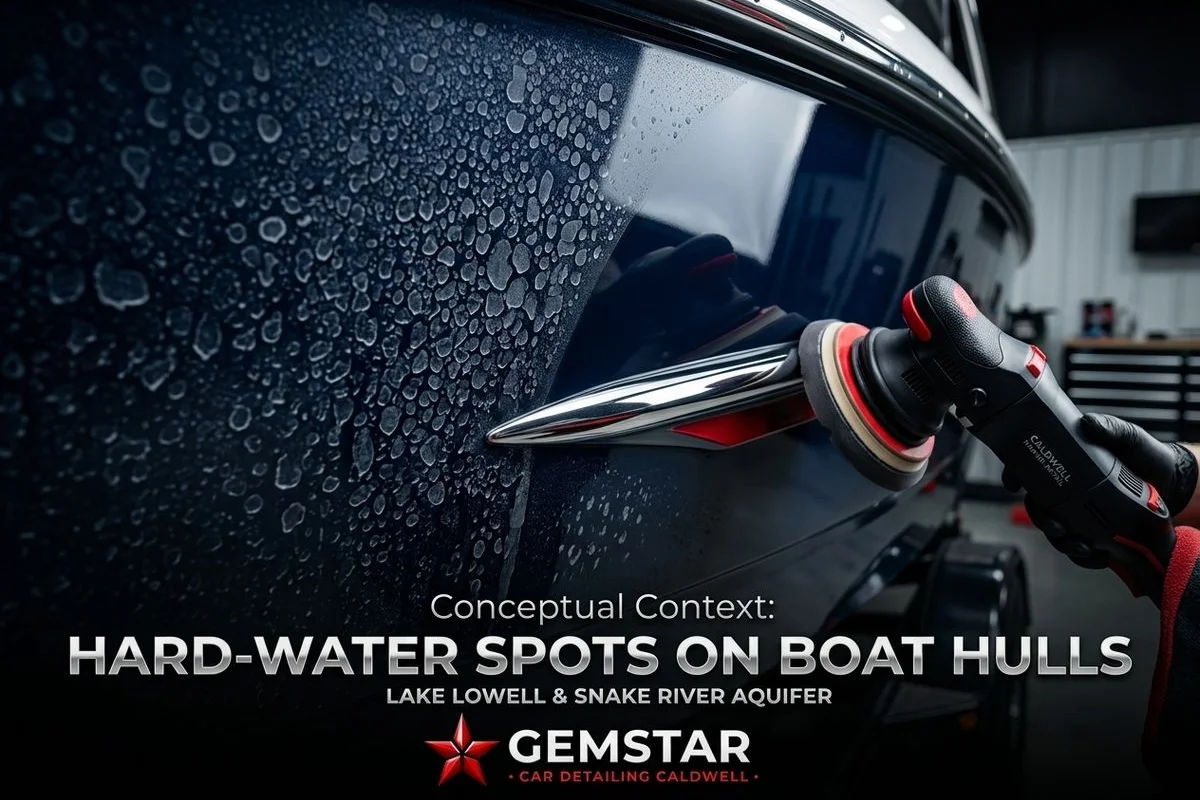
You know exactly what happens after a long weekend fighting Lake Lowell hard water. Nothing ruins a great trip faster than seeing those chalky hard water spots boat hull surfaces constantly attract baking into your gel coat before you even pull into the driveway.
We see this frustration every single week during the Idaho boating season.
The primary issue here is the exceptionally high mineral content found throughout the Snake River corridor. These deposits do far more than just ruin the glossy finish on your hull, as leaving them untouched causes permanent damage. Let’s break down the actual science behind this specific local problem, exactly how to treat it, and a few proactive ways to stop it from returning.
What Hard-Water Spots Are
Hard-water spots are chalky calcium and magnesium deposits left behind when mineral-rich water evaporates on your gel coat. They exist in two distinct phases that require very different treatments.
We always check the severity of these spots before recommending a specific cleaning method. Surface chemistry reacts very differently compared to physical abrasive polishing. Here is a breakdown of the two stages.
Surface Spots
Mineral deposits simply sit on top of the gel coat layer during this initial stage. They show up as small, off-white, circular crusts along the side of your vessel.
We often dissolve these superficial marks using specialized mild chelating agents. Products with a light acetic acid base break down the minerals quickly. They dissolve the calcium without scratching the underlying finish. Here are three safe liquid formulas we trust.
- Boat Bling Hot Sauce Water Spot Remover
- Star Brite Instant Hull Cleaner
- Ducky Water Spot Remover
Etched Spots
Minerals physically alter and chemically eat into the porous gel coat if left untreated. Standard liquid spot removers will fail completely at this point.
We have to rely on machine polishing to level out the damaged gel coat and restore the smooth surface. The shift from a surface spot to a permanent etch usually takes around 30 to 90 days of heavy sun exposure. Boats put away wet in late autumn almost always develop deep etching by the following spring.
Why Treasure Valley Water Is Hard on Boats
Treasure Valley water carries incredibly heavy loads of dissolved calcium and magnesium. These dense minerals bake rapidly onto fiberglass hulls under the hot Idaho sun.
We consistently deal with water hardness levels that dwarf the national average. Data from the US Geological Survey shows the average American water hardness sits right around 120 parts per million. The Snake River Aquifer can easily push past 400 parts per million in certain concentrated local areas.
We attribute this extreme local spotting to three main environmental factors.
- Snake River aquifer mineral profile: The surrounding limestone and basalt bedrock pump massive amounts of calcium directly into the local water table.
- Lake Lowell and Cascade concentrations: Stagnant bays and shallow reservoirs concentrate these minerals heavily by mid-summer.
- Seasonal water-level changes: Exposed shoreline sediment continually stirs into the active boating lanes during warm months.
The combined effect guarantees that Idaho boats face far more severe mineral scaling than typical coastal salt-spray vessels. Saltwater leaves a dusty film, while our freshwater calcium forms a concrete-like bond.
Light Spotting (Surface) Treatment
Light surface treatment involves using a mild acidic spray to chemically dissolve fresh mineral deposits. This prevents the calcium from hardening and burning into your exterior finish.
We follow a strict, four-step chemical process for spots that have not yet etched. Dedicated marine formulas work significantly better and safer than household bathroom cleaners. Industry favorites like Boat Bling Hot Sauce neutralize the alkaline minerals on contact.
We perform this fast service using the following steps.
- Targeted application: Technicians spray a mineral-specific spot remover directly onto a soft microfiber cloth.
- Controlled dwell time: The liquid sits for 30 seconds to two minutes based on the acid concentration.
- Thorough rinse and inspection: A heavy freshwater rinse washes away the dissolved calcium safely.
- Marine wax application: Adding a quick synthetic sealant immediately prevents new water from bonding.
You can usually complete this localized process in under an hour for minor side-splashes. Many owners schedule this as part of a Wash & Wax tier or a standalone $129 to $199 treatment.
Heavy Spotting (Etched) Treatment
Heavy etched spotting requires an abrasive mechanical polish to shave down the damaged outer layer of the boat’s finish. Chemistry alone cannot fix fiberglass that has been physically pitted by baked-on calcium.
We tackle this severe damage by essentially performing a scaled-down oxidation removal process. Most local hulls suffering from deep mineral etching also suffer from heavy sun oxidation. Premium abrasives like 3M Marine Restorer quickly cut through this dead, chalky material.
We execute the correction using a systematic approach.
- Chemical Pre-treatment: A strong acid wash dissolves any loose surface crust remaining on top.
- Single-stage compounding: Rotary polishers equipped with aggressive marine-rated compounds level the pitted fiberglass.
- Refining polish: A lighter finishing pad restores the deep, mirror-like gloss.
- Protective coating: Heavy-duty marine ceramic or paste wax seals the freshly exposed pores.
This intensive correction permanently removes the cratered rings. Because of the heavy labor involved, professional shops routinely wrap this work into a comprehensive Restoration tier visit.
Where Spots Concentrate
Water spots consistently concentrate along the waterline and the rear trailer rails where moisture clings the longest. Gravity pulls heavy mineral water down into these specific pooling zones after retrieval.
We always inspect four distinct zones when evaluating a used vessel for detailing. Spot-specific treatments keep your maintenance costs much lower than paying for a full-hull correction. Here are the most common problem areas to monitor.
- The active waterline: This specific stripe sits submerged during use and suffers the heaviest prolonged exposure.
- Forward sidewalls: Constant wave splash and heavy wind rapidly dry mineral spray onto the front corners.
- Trailer-side contact areas: Carpeted trailer bunks hold dripping water against the fiberglass for hours after you pull out of the lake.
- The bow eye and forward fittings: Tiny metal crevices trap small puddles that slowly evaporate and leave white rings.
You should always wipe down these critical zones with a dry towel before driving home. A quick five-minute wipe at the boat ramp saves hundreds of dollars in polishing fees later.
Preventing Hard Water Spots Boat Hull Damage After Treatment
Preventing hard-water damage requires physically drying your vessel and sealing the gel coat with a durable hydrophobic barrier. Stopping the water from evaporating on the surface is your best defense against Idaho’s heavy calcium loads.
We strongly recommend building three specific habits to stop permanent etching. Highly effective protection strategies save you from repeating the heavy compounding process next season. True prevention starts the second you pull your rig out of the water.
Hand-Dry After Every Wash
Never let tap water air-dry directly on your unprotected gel coat. Wiping the exterior down with a plush microfiber towel instantly removes the suspended minerals.
Invest in a Deionized Water Rinse
We suggest buying a portable filtration unit if you wash your vessel at home. Systems like the CR Spotless DIC-20 use specialized resin beds to strip the total dissolved solids down to zero parts per million. Rinsing with pure deionized water means you can actually let the exterior air-dry without leaving a single white mark. These portable units offer three massive benefits.
- Filters out 100 percent of calcium and magnesium
- Eliminates the need for aggressive towel drying
- Leaves glass and brightwork completely streak-free
Apply a Marine Ceramic Coating
We consider marine ceramic coatings to be the ultimate shield against ongoing calcium exposure. Products like Glidecoat or Gtechniq Marine lay down a hardened quartz layer that stops aggressive alkaline water from bonding. This coating keeps the corrosive elements suspended above the clear coat, even when you forget to wipe down the transom.
Pre-Season vs Season vs Pre-Storage Timing
Timing your spot removal correctly depends entirely on your boating schedule and current season. Major corrective polishing should happen during the off-season, while active summer months require simple chemical maintenance.
We advise owners to follow a distinct seasonal schedule for the best cosmetic results. Planning ahead keeps your rig looking immaculate without keeping it locked in a shop during prime boating weather.
- Pre-season prep (March through April): Treat any chalky rings that developed slowly over winter storage. Apply a heavy marine wax or slick ceramic before your initial launch.
- Mid-season maintenance: Stick exclusively to fast spot treatments at the ramp or in your driveway. Full machine restoration simply takes too long and disrupts your active recreation schedule.
- Pre-storage recovery (September through October): Treat all the heavy accumulation gathered over the summer. This autumn window remains the most highly recommended time for a comprehensive restoration.
You ensure the porous fiberglass stays sealed and protected against freezing temperatures by finishing the major polishing work in late autumn.
Cost Range
Professional hard-water spot removal pricing depends on the total linear footage and the depth of the mineral etching. Light chemical treatments start around $99, while heavy machine polishing scales up significantly.
We provide exact pricing based on a thorough physical inspection of the hull. National averages for standard marine compounding run between $20 and $50 per foot, but localized boat water spot removal treatments cost much less. Here are the typical estimates for standalone spot treatments.
Standalone Treatment Estimates
A quick response keeps the final bill manageable for most owners.
- Light surface spotting: A single affected area on a standard 20-foot runabout runs roughly $99 to $199.
- Moderate spotting: Treating the full hull with very light etching typically lands between $299 and $599.
- Heavy etched spotting: Severe damage requires a custom quote and is strictly handled within a comprehensive Restoration package.
We commonly bundle this specialized stain work with full heavy oxidation removal and marine waxing. You can find our standard per-foot pricing outlined clearly in our boat detailing services.
Get a written quote on hard-water spot removal →
Please reach out to our team early in the season to secure your spot on the shop calendar. Proper protection today saves your gel coat from expensive repairs tomorrow. Let us help you eliminate those stubborn hard water spots boat hull surfaces attract and get you back on the water.
Related Service
Boat Detailing
Ready to book this service in Caldwell? Get a same-day written quote.
Learn More About Boat Detailing