Detailing Guide
Boat Oxidation Removal: What It Is and When You Need It
How marine gel coat oxidizes, why Treasure Valley waters accelerate it, and what professional restoration involves.
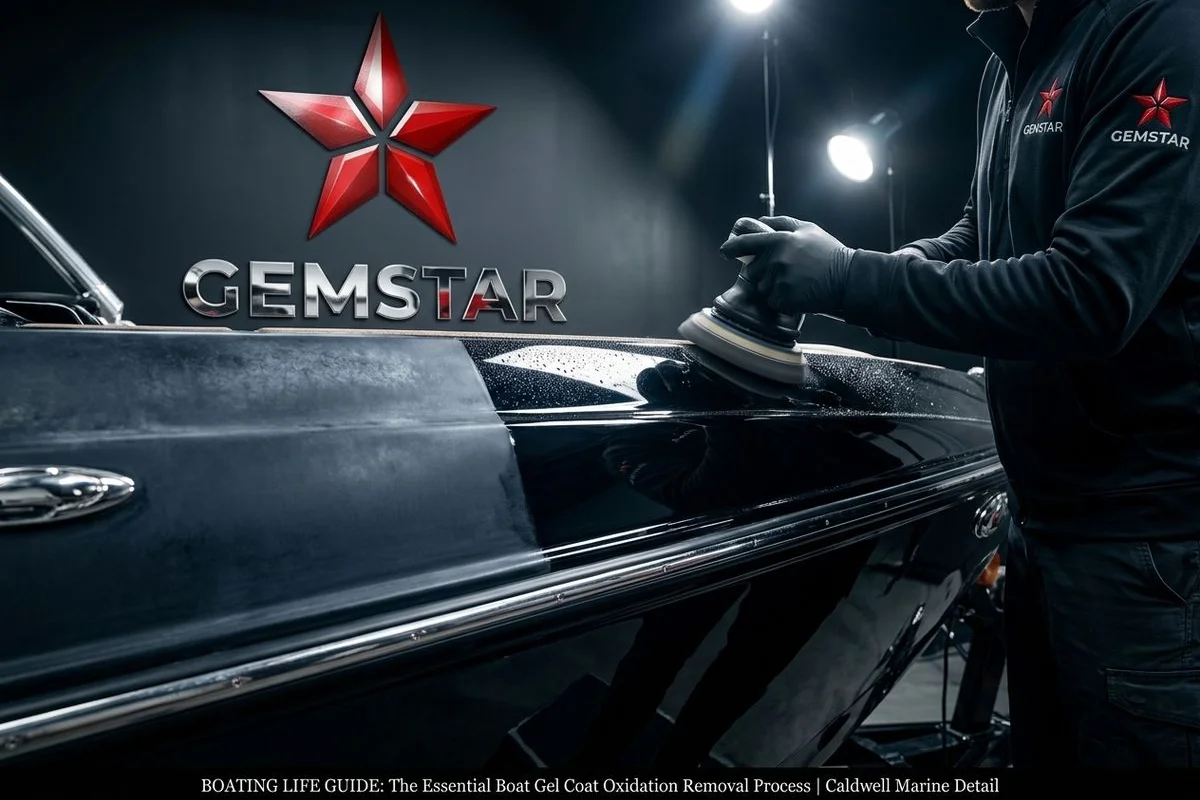
Marine gel coat fades much faster than automotive paint under the harsh Treasure Valley sun.
We regularly see the local Idaho boating conditions accelerate this exact process.
Understanding the root cause of this fading helps owners preserve both the appearance and resale value of their vessels.
Let’s look at the actual data behind boat oxidation removal, what the environment is doing to your hull, and the exact steps to fix it.
What Marine Gel Coat Is
Marine gel coat is a specialized, thick layer of pigmented polyester resin applied to the outside of a fiberglass boat hull. It acts as the primary structural defense against water and UV damage.
Our technicians treat this material differently than car paint because it is incredibly porous.
The average boat gel coat measures a massive 15 to 20 mils thick, whereas automotive clear coat typically measures a mere 1.5 to 2 mils thick.
We use aggressive techniques specifically because this heavy material acts like a microscopic sponge.
Key characteristics of this protective layer include:
- UV Stabilizers: Built-in chemicals that resist sun damage but slowly burn off over 3 to 5 years.
- Porosity: Microscopic pores that expand when heated, trapping dirt and accelerating wear.
- Thickness: The heavy build allows for deep polishing without immediately striking the underlying fiberglass.
How Idaho Conditions Affect It
Idaho environments subject boats to a punishing combination of high-altitude sun and hard-water mineral exposure. These factors actively break down the protective surface much faster than coastal climates.
Our local clients often wonder why their maintenance schedules fail to keep up with the damage.
The answer lies in the unique regional geography that attacks the finish from multiple angles.
Boats face four conditions that do not apply equally to cars or coastal vessels:
- Direct UV at altitude: Lake Cascade sits at nearly 4,800 feet. The World Health Organization reports that UV radiation increases by up to 12% for every 1,000 meters of elevation, blasting the surface with intense solar energy.
- Hard-water mineral content: Snake River corridor water often tests above 120 parts per million for calcium and magnesium. These minerals bake into the porous resin and cause severe chemical etching.
- Outdoor storage: Most Caldwell-area boats sit unprotected between trips. The constant summer heat forces the pores open, allowing contaminants to settle deep into the finish.
- Trailer transport: Towing at highway speeds embeds iron particles from vehicle brakes directly into the leading edges of the hull.
We see this combined effect cause rapid failure, pushing boats ahead of standard manufacturer maintenance timelines.
Stages of Oxidation
Oxidation progresses through four distinct stages, ranging from a minor surface haze to complete structural failure. Catching the damage early makes boat gel coat restoration significantly cheaper and faster.
Our shop classifies hull condition based on the visual and physical breakdown of the outer resin.
Catching the issue at the light stage costs a fraction of the $80 to $120 per foot required for severe structural repair.
The deterioration happens in four progressive phases:
- Light: Minor surface haze blocks the shine. The damage is detectable upon close inspection but easily corrected with a light polish.
- Moderate: Visible dullness takes over the surface. You will notice a chalky boat hull, meaning the dead resin leaves a white powder on your hands. This is most common on four to six-year-old Treasure Valley boats.
- Heavy: Severe chalking strips the finish, particularly on the upper hull and front cap. The factory color looks visibly faded and flat.
- Severe: Complete resin matrix degradation exposes the fiberglass fibers. This extreme stage may be partially restorable, but it often requires professional refinishing.
We find most outdoor-stored local boats hit the moderate stage by year five and the heavy stage by year eight without intervention.
Restoration Process
The correct restoration method requires a specific sequence of heavy chemical decontamination followed by aggressive machine compounding. Severity always dictates the exact approach required.
Our standard process for moderate oxidation on a 21-foot wakeboard boat involves seven distinct steps.
Skipping the chemical preparation phase guarantees poor results, as polishing over hard water spots just drives the minerals deeper.
A proper correction follows this sequence:
- Full hand wash: A foam pre-soak with marine-safe soap strips loose surface dirt.
- Hard-water spot treatment: Acid-based cleaners dissolve the calcium deposits left from Lake Lowell or the Snake River.
- Iron decontamination: Dedicated chemical sprays dissolve the bonded iron particles picked up from trailer transport.
- Compounding pass: Heavy-cut marine products, like the 3M Perfect-It system or Meguiar’s M67, remove the dead layer using a wool pad.
- Refining polish: A lighter polish removes the heavy compound haze and restores the mirror gloss.
- IPA wipedown: Isopropyl alcohol removes all residual polishing oils to ensure a clean bonding surface.
- Protection application: A final layer of wax or ceramic seals the freshly exposed layer.
We add a second compounding pass with an even heavier cut for highly neglected boats.
A complete evaluation determines if the damage has gone too deep for standard correction and requires new gel coat.
Equipment That Matters
Effective correction requires specialized marine tools and heavy-duty chemistry. Automotive products simply lack the physical cutting power to correct a thick, porous hull.
Our technicians rely entirely on purpose-built marine gear in the Caldwell shop to avoid predictable disappointment.
Standard dual-action car polishers stall out on flat fiberglass sides, making high-torque rotary machines an absolute necessity.
Professional shops use entirely different gear for marine applications:
- Marine-rated compounds: Formulated with aggressive abrasives to cut through harder materials.
- Large wool pads: Eight-inch rotary wool pads generate the necessary friction and cover the massive, flat surface areas faster than foam.
- High-torque polishers: Heavy-duty machines maintain pad rotation under heavy pressure.
- Marine wax: Blended to resist constant water immersion rather than just highway traffic film.
- Marine ceramic: Features a unique silicon dioxide chemistry formulated specifically for prolonged water and UV exposure.
We always warn owners that driveway projects using car polish rarely produce lasting results.
Pre-Season vs Active-Season vs Pre-Storage
Scheduling your service depends on your boating habits, but wrapping up work before winter yields the best long-term results. Maintenance falls into three distinct seasonal windows.
Our schedule typically fills up based on these natural seasonal shifts.
Temperature plays a massive role in scheduling, as modern sealants require stable weather above 50 degrees Fahrenheit to cure properly.
Choose the window that fits your usage:
- Pre-season (March to April): The perfect time to prep boats before the Lake Lowell opener. This gives the sealant plenty of time to cure before hitting the water.
- Active season (May to August): Mid-summer work is entirely possible but slot-limited. Shops typically squeeze these jobs into the off-week between rentals or family trips.
- Pre-storage (September to October): The smartest end-of-season investment. Shrink wrap traps moisture during the winter, so going into storage fully protected prevents off-season degradation.
We highly recommend the pre-storage window for full restoration packages.
The vessel enters the cold months fully sealed and emerges the next spring completely ready to launch.
After Restoration: Lock In Protection
Once the hull is flawless, you must apply a sacrificial barrier to prevent the sun from restarting the damage cycle immediately. Owners typically choose between traditional carnauba waxes, synthetic sealants, or advanced ceramics.
Our team matches the protective coating to how heavily the vessel gets used and where it sleeps at night.
Standard carnauba products start melting when surface temperatures exceed 140 degrees, which happens quickly during a brutal Idaho July.
We offer three primary options to extend the lifespan of the fresh finish.
| Protection Type | Average Cost Addition | Expected Lifespan | Best For |
|---|---|---|---|
| Marine Wax | $200 to $400 | 4 to 6 months | Moderately used boats stored indoors. |
| Marine Sealant | $300 to $600 | Up to 12 months | Boats needing full summer protection. |
| Marine Ceramic | $1,500+ | 18 to 24 months | Heavily used boats stored completely outdoors. |
Premium coatings build a microscopic layer of hard glass that aggressively blocks UV rays and repels hard water spots.
We strongly suggest the ceramic route for the highest long-term value.
Related Service
Boat Detailing
Ready to book this service in Caldwell? Get a same-day written quote.
Learn More About Boat Detailing