Detailing Guide
Best Ceramic Coating for Idaho Winters and Treasure Valley Dust
What to look for in a ceramic coating built to handle Caldwell mag chloride, harvest dust, and high-altitude UV — and which tier fits.
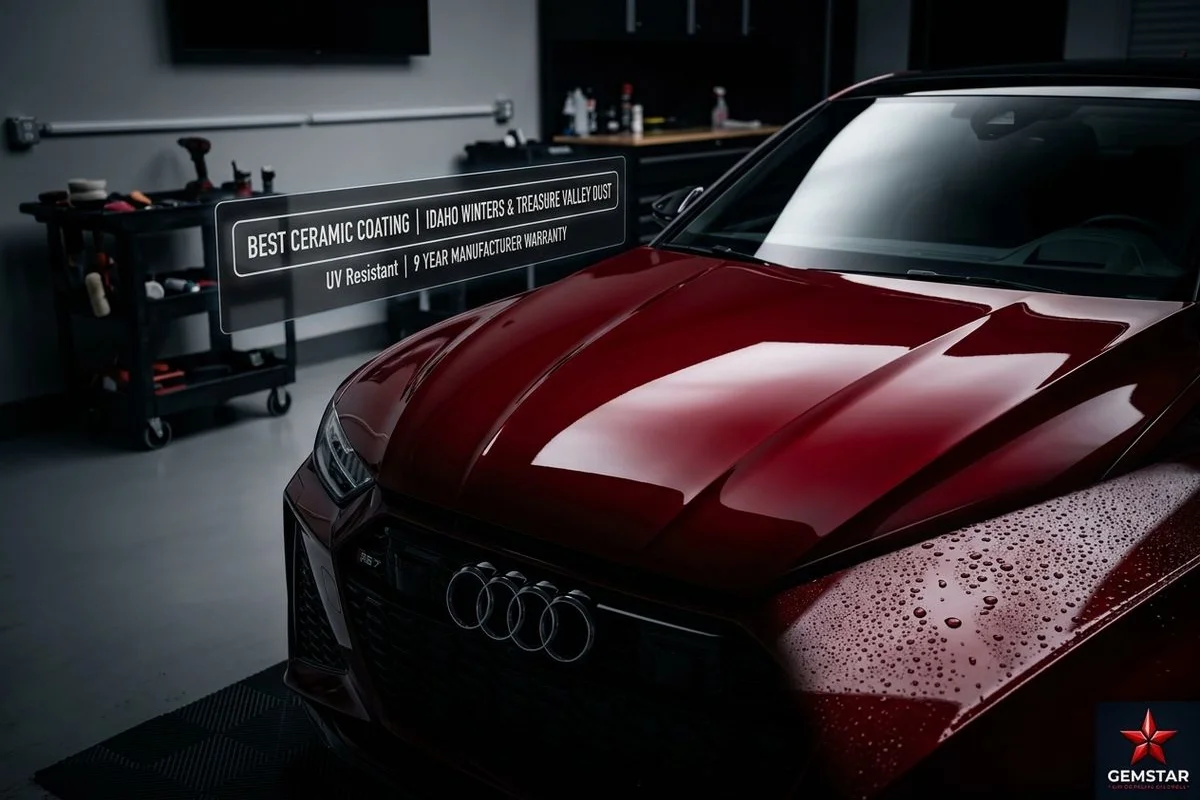
Many auto detailers act like a generic ceramic bottle works the same everywhere.
We see Caldwell’s environment destroy standard products within months. Finding the best ceramic coating Idaho has to offer requires a formulation specifically calibrated for the extreme variations of the region.
This breakdown highlights the exact local factors degrading your clear coat. Our team will walk you through a few practical ways to respond and get your vehicle properly protected.
What the “Best Ceramic Coating Idaho” Actually Means
The best coating for Idaho means a formula specifically engineered to withstand heavy winter road brine and 2,345 feet of elevation UV exposure. A generic consumer-grade product simply degrades too fast in these aggressive conditions.
We see generic formulas fail constantly because they cannot handle the unique hazards of the Treasure Valley. The right ceramic coating treasure valley drivers need must combat five distinct regional threats.
- Sustained magnesium chloride exposure: The Ada County Highway District and local transportation departments drop hundreds of thousands of gallons of liquid brine through the 3 to 4 month winter season.
- High-altitude UV rays: Caldwell sits at 2,345 feet with over 200 sunny days per year, causing unprotected clear coat to oxidize fast.
- Hard-water mineral content: The Snake River corridor groundwater measures between 8 and 15 grains per gallon, leaving severe calcite spots on the paint.
- Seasonal agricultural dust: Fine PM10 particulate from local harvests bonds to surfaces fast and acts like a subtle abrasive.
- Wide temperature swings: Vehicles endure single-digit winter mornings and 100°F summer afternoons, forcing the clear coat to expand and contract.
Our Gem Shield System
Our proprietary Gem Shield system provides four specific tiers of manufacturer-certified protection for your vehicle. Each option delivers a verified 9H pencil hardness rating to block out local environmental contaminants.
Professional-grade coatings physically bond with your paint to create a sacrificial layer. This hardened barrier takes the daily abuse instead of your factory clear coat.
We install four distinct tiers, all sourced directly from the same manufacturer-certified system.
- 1-Year: Entry-level single layer. Beats wax and sealants in Caldwell conditions but lasts exactly as long as the name suggests.
- 3-Year: Stronger UV and brine resistance with light paint correction included. Most popular for daily drivers on Interstate 84.
- 5-Year: Multi-stage correction included for a deeper gloss and stronger long-term performance. The sweet spot for $30,000 plus vehicles and extended ownership.
- 9-Year Flagship: Three-stage correction with a two-layer application and a jeweling polish for the deepest gloss. Backed by a 9-year manufacturer warranty.
Which Tier Fits Caldwell Conditions
Finding the best ceramic coating Caldwell offers depends entirely on your vehicle’s daily exposure to road salt, sunlight, and total mileage. A daily commuter requires a completely different protection strategy than a weekend classic.
We strongly suggest aligning your coating choice with your actual driving habits. This approach prevents you from overspending on a garage queen or under-protecting a truck that sits outside 365 days a year.
| Vehicle Use Case | Recommended Tier | Primary Idaho Threat Addressed |
|---|---|---|
| Year-Round Daily Driver | 3-Year minimum, 5-Year recommended | Heavy winter magnesium chloride brine |
| Outdoor Work Truck | 5-Year is the right call | Extreme UV rays and PM10 agricultural dust |
| Weekend Enthusiast Car | 1-Year or 3-Year | Lower exposure, mainly hard water spotting |
| High-Value Vehicle | 9-Year Flagship | Long-term degradation across all seasons |
Why Idaho-Specific Matters
A geographic mismatch is the primary reason ceramic applications fail prematurely. A coating engineered for a humid coastal environment simply cannot survive the dry, alkaline dust and winter chemicals of the Gem State.
Our team selected the Gem Shield system specifically because its chemistry remains stable across Caldwell’s wild temperature spectrum. Manufacturers often formulate and test their products for their specific local testing grounds.
A product built in Florida might resist saltwater spray perfectly but degrade rapidly under 2,345 feet of high-altitude UV rays.
A coating designed for Phoenix heat might crack when exposed to freezing February brine. You need cross-linked polymers that flex and survive extreme environmental swings. This chemical adaptability prevents the microscopic cracking that lets water and salt reach your paint.
Application Conditions Matter as Much as Chemistry
Even the most expensive ceramic chemistry fails completely if it cures in the wrong environment. Applying these products requires a climate-controlled bay to ensure the polymers cross-link successfully with the paint.
We maintain a specific facility at 3031 Syringa Ln precisely for this reason. A driveway installation in typical Caldwell weather will not produce the rated performance, regardless of the brand. The curing process demands a strict 60°F to 80°F temperature window with humidity below 70 percent.
If you attempt this outside, airborne dust bonds instantly to the wet surface.
- Temperature control: Stable heat ensures the solvents evaporate at the exact right speed to form a durable shell.
- Humidity management: High moisture adds 24 to 48 hours to the cure time and severely weakens the bond.
- Lighting precision: Manufacturer-specified LEDs reveal microscopic defects before the coating locks them in permanently.
- Contamination prevention: Dust-free bays stop PM10 particles from ruining the final gloss during the crucial 24-hour flash period.
Our technicians have re-corrected and re-coated more than one DIY installation that failed within months due to poor curing conditions.
What to Ask Any Detailer
You must demand proof of a controlled environment, manufacturer certifications, and a written warranty before handing over your keys. Any reputable shop will gladly provide this documentation upfront to prove their competence.
Our industry suffers from too many amateurs operating out of dirty garages with unverified products. Before booking an appointment anywhere in Canyon County, make sure you request these specific items.
- Manufacturer certification documentation: Proves the shop is authorized to buy and apply professional-grade liquids.
- Sample written quote with itemization: Details the exact stages of paint correction included in the price.
- Photos of the climate-controlled bay: Verifies they have the required indoor infrastructure to cure the coating properly.
- Aftercare protocol in writing: Explains exactly how to wash the car to prevent hard water spots.
- Sample warranty document: Shows the specific terms, maintenance requirements, and duration of coverage.
Missing any of these basic requirements means you should look elsewhere immediately. Finding the best ceramic coating Idaho detailers provide means verifying these credentials before they touch your paint.
Related Service
Ceramic Coating
Ready to book this service in Caldwell? Get a same-day written quote.
Learn More About Ceramic Coating