Detailing Guide
Two-Bucket Hand Wash vs Automatic Car Wash
Why the two-bucket method preserves clear coat where automatic tunnels destroy it — and what 'done right' looks like.
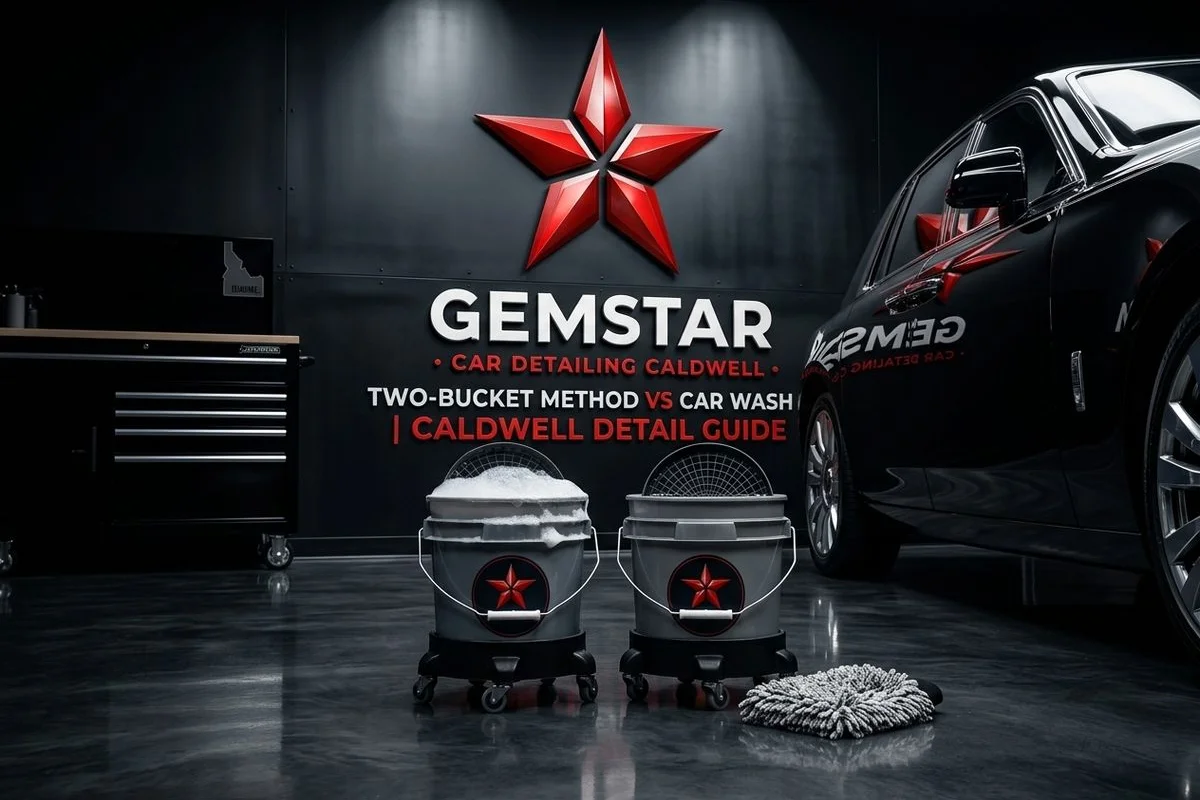
Our detailing team sees the same frustrating swirl marks on vehicles every single week. The two bucket method is the gold standard for hand washing cars safely.
This technique prevents you from grinding dirt back into your paint.
We are going to break down exactly how this process works. Let’s explore the science behind clear coats and outline the practical steps for a perfect wash.
What “Two-Bucket Method” Means
Our two-bucket method uses one container for soapy water and a separate container just for rinsing. This simple setup keeps harmful dirt particles trapped away from your clean wash mitt.
The process involves dunking your mitt in the soap bucket, washing a single panel, and thoroughly rinsing it in the second bucket. We always see amateur hand washes cause severe damage when a single bucket is used. A dirty mitt drags accumulated grit straight across the vehicle.
Data from automotive paint studies shows that modern US car clear coats average only 30 to 60 microns thick. Our experience shows that a single piece of trapped sediment can easily scratch right through that microscopic layer. The required equipment is very straightforward.
- Bucket 1: Clean, soapy water with a grit guard at the bottom.
- Bucket 2: Clean rinse water with a grit guard at the bottom.
Why Grit Guards Matter
Our team relies on grit guards to trap heavy sediment at the base of the bucket safely out of reach. A grit guard is a plastic radial insert placed at the very bottom of your wash bucket. Inventor Doug Lamb created the original Grit Guard to kill the water vortex created when you rinse a mitt.
We use these inserts because they physically prevent dirt from re-suspending in the water. The four fins underneath the guard stop the water from spinning. You must place these guards in both your wash and rinse buckets for maximum safety.
What Soap to Use
We strongly recommend using a pH-neutral, automotive-specific shampoo for every hand wash technique. This type of soap provides the essential lubrication needed to lift dirt safely without degrading your wax.
A common mistake is reaching for Dawn dish soap, which is highly alkaline. Our tests show that harsh dish detergents instantly strip protective wax and leave your clear coat vulnerable to UV damage.
A proper 16-ounce bottle of premium car shampoo usually costs $15 to $30 and easily lasts a year of weekly washes. Specific chemicals will absolutely destroy your finish over time.
- Dish soap: Strips wax and dries out rubber seals.
- Traffic film removers: Contains caustic chemicals designed for touchless tunnels.
- Wash and wax combos: Often rely on cheap fillers that mask defects rather than clean them.
- Generic household detergents: Lacks the required slickness to prevent micro-scratching.
Mitt Selection
Our preferred wash mitts are made from a plush 70/30 or 80/20 microfiber blend. High-quality microfiber fibers draw dirt deep into the material and safely away from the paint surface.
Mitts like the Chemical Guys Chenille or Microfiber Madness Incredimitt offer incredible softness and durability. We suggest separating your tools based on the specific area of the vehicle you are cleaning. Using a dedicated wheel mitt prevents abrasive brake dust from ever touching your hood or doors.
Certain materials are completely inappropriate for automotive clear coats. Our detailers reject the following items to prevent surface marring. Avoid these options at all costs.
- Cheap microfiber sponges: The dense foam surface physically traps dirt right against the paint.
- Yellow auto-aisle blocks: These stiff sponges are built for boats, not delicate automotive finishes.
- Reused household sponges: They lack the necessary plushness to absorb grit.
- Shop rags: The flat weave offers zero protection against scratching.
The Foam Cannon Pre-Soak
We always initiate a contact wash with a thick layer of foam from a specialized foam cannon. This crucial step dissolves and lifts heavy contamination before you ever touch the paint.
You should apply a high concentration of pH-neutral soap mixed at a 1:8 to 1:12 ratio with water. Our standard procedure lets this foam dwell for five to ten minutes to do the heavy lifting.
A basic foam cannon attachment for a home pressure washer costs between $40 and $80. This tool offers several distinct advantages for safe home detailing.
- Touchless cleaning: Removes abrasive surface grit safely.
- Chemical dwelling: Gives soap time to break down stubborn road film.
- Lubrication: Adds an extra layer of slickness before your mitt touches the panel.
Drying
We consider proper drying to be just as critical as the wash phase to prevent permanent water spots. Allowing tap water to air-dry leaves behind hard mineral deposits, especially in regions with high calcium levels.
Dragging a cheap towel across the surface can instantly undo all your careful two bucket method washing. Our shop uses forced-air blowers to safely push water out of delicate crevices, mirror seams, and body lines.
The right equipment makes this process entirely frictionless. You have several excellent options for safe water removal.
- Plush microfiber drying towels: High-GSM twisted loop towels cost $25 to $40 and absorb massive amounts of water safely.
- Dedicated forced-air blowers: Touchless drying completely eliminates friction on the clear coat.
- Air-pump compressor wands: Perfect for pushing trapped water out from behind trim pieces.
We highly advise against using outdated drying accessories. Some traditional methods are practically guaranteed to leave swirl marks. Avoid these common pitfalls to protect your finish.
- Traditional leather chamois: Older synthetic or natural chamois materials can easily cause micro-marring.
- Standard shop towels: These are far too abrasive for modern paint finishes.
- Direct sunlight air drying: This bakes minerals directly into the clear coat before you can wipe them away.
Why This Beats Automatic Tunnels
Our direct comparison shows that automatic tunnels inflict thousands of micro-scratches over a single year of use. Those spinning brushes carry embedded grit from the muddy truck that went through just before you.
Even touchless washes pose a serious threat to your vehicle finish. We constantly see the damage caused by the highly acidic or alkaline chemicals used in tunnel pre-soaks.
These harsh solutions are engineered to melt dirt quickly, but they strip away premium sealants and degrade clear coats. The choice between a two bucket method vs car wash comes down to friction and chemistry.
| Feature | Automatic Tunnel | Two-Bucket Hand Wash |
|---|---|---|
| Friction Source | Shared spinning brushes | Dedicated clean microfiber |
| Chemical pH | Harsh alkaline or acidic | Gentle pH-neutral |
| Water Quality | Recirculated and contaminated | Fresh and filtered |
| Drying Method | Abrasive slapping cloth dryers | Touchless air or plush towels |
When to Pay Us vs Do It Yourself
Our service menu perfectly complements your weekly DIY maintenance washes. Many local drivers handle the routine cleaning themselves and schedule quarterly deep details with professionals.
Handing off the complex decontamination work saves you hours of frustrating labor. We recommend booking professional services when your vehicle requires specialized chemical treatments or paint enhancement.
Professional detail packages typically range from $150 to $300 for comprehensive care. There are several distinct advantages to utilizing a commercial facility.
- Advanced Decontamination: Applying iron removers and clay bars safely is often beyond standard DIY scope.
- Brine-Season Deep Cleans: Commercial-grade undercarriage equipment is required to neutralize winter road salts.
- Climate-Controlled Environments: Washing outdoors during freezing winter months is nearly impossible without heated bays.
- Time Efficiency: Paying $69 for an Express detail can give you your entire Saturday morning back.
We consider the two bucket method to be the ultimate defense against premature paint failure. Master this technique to protect your vehicle, or let professionals handle the heavy lifting. You can easily Book a hand-wash detail or buy a starter kit → directly through our website to secure your next appointment.
Related Service
Exterior Detailing
Ready to book this service in Caldwell? Get a same-day written quote.
Learn More About Exterior DetailingRelated Guides