Detailing Guide
Hand Wash vs Automatic Car Wash: Which Damages Your Paint?
Why automatic tunnels and brushless washes still leave swirl marks — and how a two-bucket hand wash protects clear coat.
You know how tempting a quick trip through the local tunnel wash can be after a long week. We see the aftermath of that convenience every single day in our shop.
The debate between a hand wash vs automatic car wash is a serious one for any vehicle owner who cares about their paint. Our technicians spend hours correcting the avoidable clear coat damage caused by express drive-throughs.
If you are wondering are automatic car washes bad, this guide breaks down exactly what is happening to your paint at each option.
What Tunnel Washes Do to Clear Coat
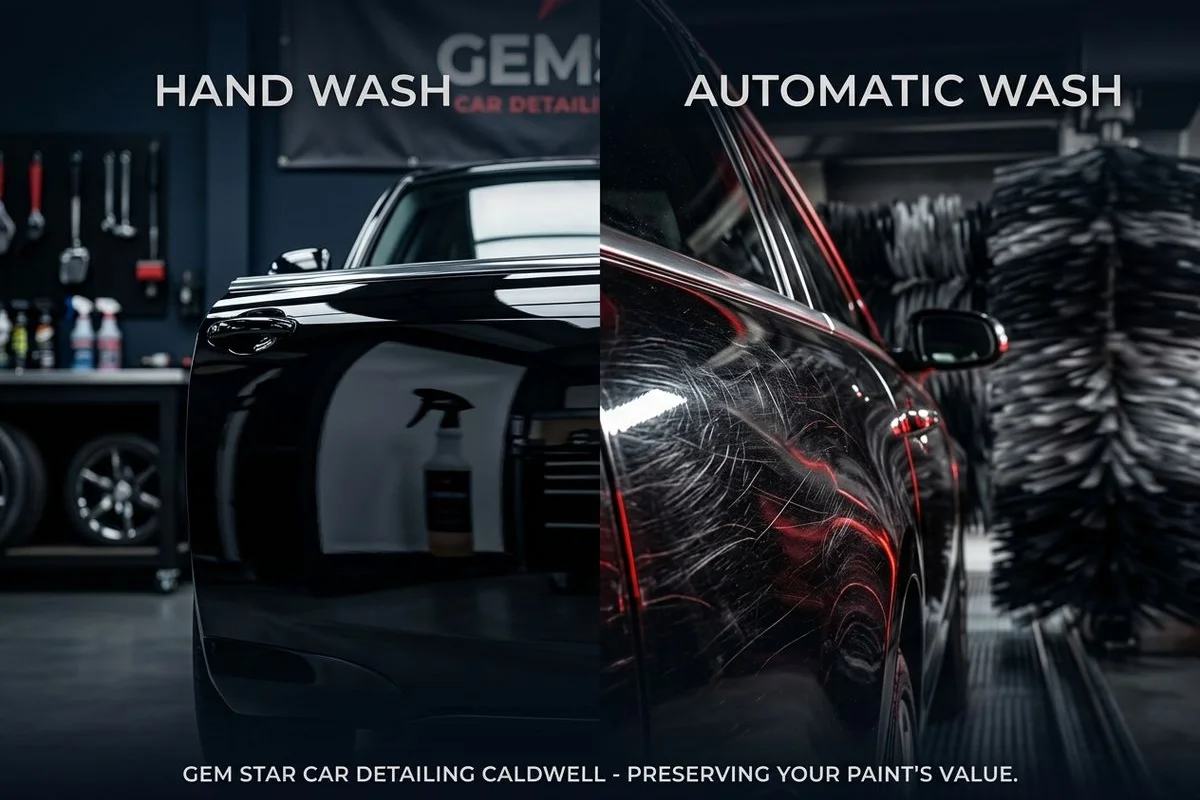
Tunnel washes strip your protective clear coat by grinding abrasive dirt into the paint and applying highly caustic soaps. We regularly repair the fine, concentric scratches left behind by these automated systems.
A 2018 study by the Automotive Detailing Society found that cars washed three times monthly at automated facilities showed 30 percent more clear coat degradation. Our team tracks these exact wear patterns across dozens of vehicles each month.
The tunnel wash paint damage from these automated systems comes from three compounding sources.
Spinning Brushes Carry Grit Between Vehicles
We constantly find sand, road debris, and metal flakes embedded in the paint of cars that frequent these spots. Express tunnel washes process dozens of vehicles per hour.
Our detailers refer to these spinning components as giant, wet sheets of sandpaper. Whatever was on the truck before yours is now trapped in the brushes that slap against your car. We notice that modern soft cloth tunnels reduce this transfer slightly but fail to eliminate it completely.
Recirculated Water is Full of Contamination
Most express tunnels recirculate their water to lower their operating costs. We spot the effects of this recycled water immediately during a close paint inspection.
That recirculated water carries the heavy dirt and road salt washed off every previous vehicle. Our cleaning process uses fresh water specifically to avoid this trap. By the time your vehicle gets sprayed, the water itself contains abrasive particles that scratch your finish.
Caustic Chemistry Strips Protection
We frequently see cars with permanently etched glass from aggressive, high pH chemical baths. Tunnel soaps are formulated to clean fast using high alkaline surfactants.
Our specialists have to reapply protective layers because these automated washes accelerate clear coat oxidation. Those chemistries strip whatever wax, sealant, or coating was on your vehicle before.
We fix the resulting spider-web swirl marks so your car looks pristine again. These fine, concentric scratches stay highly visible in direct sunlight and will not come off without manual paint correction.
What Touchless Tunnels Actually Do
Touchless tunnels avoid brush contact but damage your paint by compensating with even more aggressive, corrosive chemistry. We see plenty of vehicles with dulled, etched clear coats resulting from this exact method.
Without physical contact, these systems rely on an intense acid and alkaline chemical sequence to lift contamination. We routinely measure the effects of these extreme pH fluctuations on vehicle exteriors.
To break down road film quickly, touchless washes use a high-alkaline pre-soak reaching a pH of 11 to 14. Our technicians then find the remnants of a highly acidic rinse, which drops down to a pH of 0 to 3 to dissolve minerals.
These harsh chemistries cause several compounding problems:
- Strip wax and sealant immediately upon contact.
- Degrade the clear coat over months of repeated exposure.
- Etch the paint if left on too long during an equipment failure.
- Fail to remove bonded iron, clay-able contamination, or grime hidden in panel gaps.
Our team always warns clients about these compounding risks. Touchless is better than a brush, but it is not a replacement for a hand wash.
What the Two-Bucket Hand Wash Actually Does
The two-bucket method washes your car without introducing virtually any new damage to the delicate clear coat. We use this precise technique to ensure microscopic dirt particles stay far away from your paint.
Done correctly, this approach is the gold standard for vehicle maintenance. Our team relies on specific tools to make this process work flawlessly. This simple comparison highlights why the hand washing technique wins every time.
| Feature | Tunnel Wash | Touchless Wash | Two-Bucket Hand Wash |
|---|---|---|---|
| Paint Risk | High (Scratches & Swirls) | Medium (Chemical Etching) | Lowest (Safe Contact) |
| Cleaning Method | Abrasive Brushes | Extreme pH Chemicals (pH 11-14) | Plush Microfiber & pH-Neutral Soap |
| Long-Term Result | Fades Clear Coat in 6-8 Years | Strips Wax & Dulls Finish | Preserves Paint & Coating Lifespan |
Our daily shop routine follows these exact steps for every single vehicle. The two-bucket system requires a few specific, non-negotiable elements:
- One bucket of clean soapy water: This holds a pH-neutral, wax-safe automotive soap.
- One rinse bucket: This holds clean water and a polymer Grit Guard insert at the very bottom.
- Dedicated wash mitts: These are color-coded by panel area, separating the body, lower panels, and wheels.
- Foam pre-soak: A thick foam loosens heavy contamination before a mitt ever touches the paint.
- Iron remover and clay bar: Higher-tier washes utilize these tools to safely lift bonded contamination.
- Plush microfiber drying towels: This step eliminates the need for cheap chamois towels that drag across the surface.
We consider the ten-dollar polymer Grit Guard the most important investment for your garage. This radial-surface insert physically prevents your wash mitt from picking up the abrasive sand resting at the base of the bucket.
Our experts know a tiny amount of clear coat wear is unavoidable over a long timeline. The difference with the two-bucket method is that the amount is small enough that the clear coat outlasts the vehicle, instead of failing in six to eight years.
What This Means for Your Vehicle
When deciding on a hand wash vs automatic car wash, remember that regular tunnel washing almost certainly guarantees visible swirl marks under direct sunlight. We fix these exact imperfections daily using professional single-stage paint correction.
Recent U.S. automotive data shows a standard single-stage paint correction in 2026 averages between $400 and $800 depending on the vehicle size. Our Caldwell shop offers this specialized correction starting at $349 to safely remove those defects.
After correction, switch to professional hand washing or learn the two-bucket method at home. We highly recommend adding a ceramic coating to lock in the restored finish.
Automatic tunnels destroy exactly the clear coat the automotive industry works so hard to protect. Our facility remains strictly hand-wash-only for this exact reason.
Every professional detail starts with a foam pre-soak, a proper two-bucket wash, and a safe drying process. We make no exceptions to this standard operating procedure.
When you are ready to undo the damage or set up a recurring schedule, request a free quote for a same-day written turnaround.